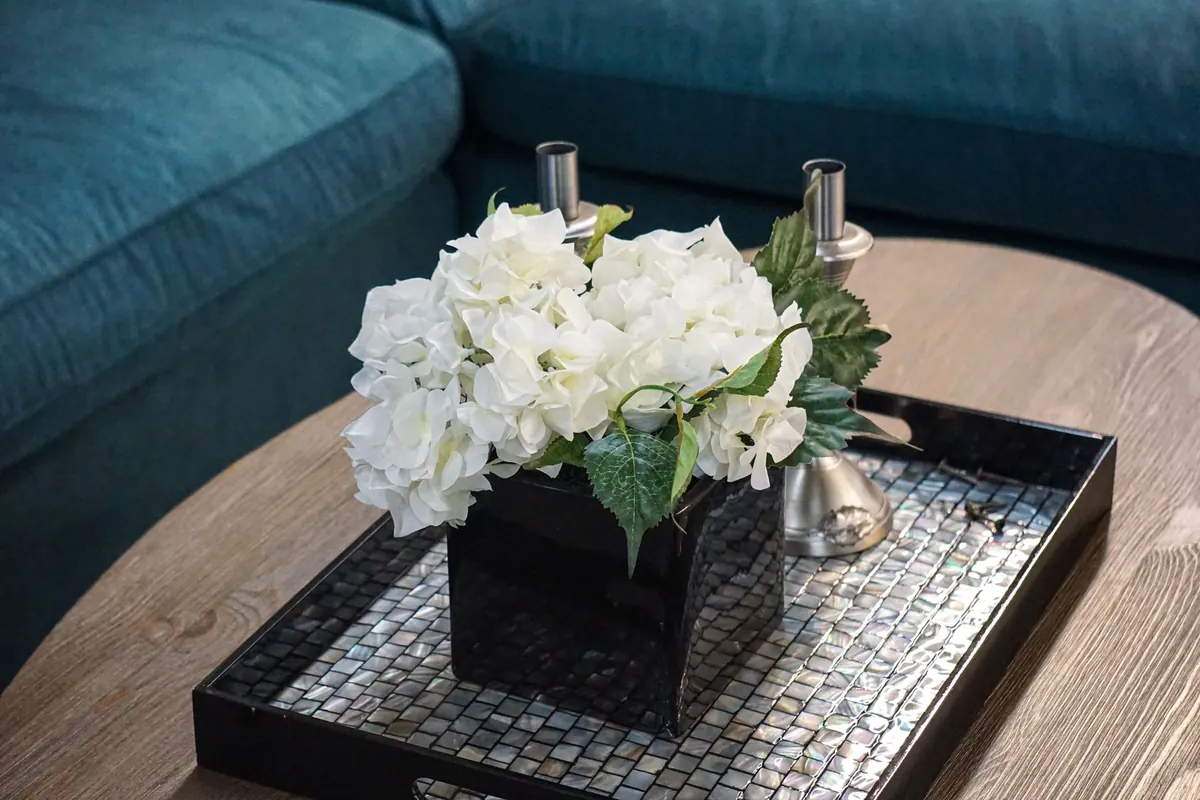
Coffee Table Styling for Beginners: The 3-Object Rule
Most coffee tables in real homes hold a mug, a remote, a hair tie, and one lonely candle nobody ever lit. That is not a styling failure. It is what happens when nobody decides what belongs there. The good news is that you do not need a designer's eye or a shopping trip to fix it. You need a rule: three objects, each with a job, and then stop.
This is the method I use on every table, whether it is a heavy oak slab or a plain rectangle from a flat-pack box. It takes about five minutes, it works with things you already own, and it survives real life — including feet on the table and a bowl of popcorn on movie night.
What the 3-Object Rule Really Says
Every well-styled coffee table resolves into three roles:
- A base — a horizontal mass that anchors the arrangement, usually books or a tray.
- A vessel — something hollow: a bowl, a vase, a woven basket, a lidded box.
- An accent — the item that adds height, shine, or texture. The bit of personality.
Why three? Two objects often look accidental, like you set something down and forgot it. Four or more starts to read as clutter, especially on a narrow table. Three is the smallest number that lets you build a triangle your eye can follow, and the largest number that still leaves room to live.
One number to keep in mind: your objects should cover roughly a third of the tabletop. The rest stays empty. Negative space is not wasted space — it is what makes the three things look intentional rather than piled up.
Object One: The Base
Books are the easiest base and the most forgiving. Stack two or three hardcovers, largest on the bottom, and keep the spines in a calm family — cream, black, navy, faded brown. If the dust jackets clash with your room, take them off; most hardcovers look better naked anyway.
Stop at three. A taller tower becomes unstable, hard to dust around, and reads as a storage problem rather than a design choice.
If remotes, coasters, and reading glasses keep wandering onto your table, use a shallow tray instead. Wood, brass, woven fibre, or a lacquered box all work. Choose one no wider than about a third of the table's length so it still leaves open surface. A tray is the single most practical upgrade for a busy living room, because it gives the chaos a home you can lift away in one motion.
Object Two: The Vessel
An empty bowl is a completely valid styling choice. So is an empty vase. You are choosing it for its shape, colour, and material, not for what it holds.
Scale matters more than style here. A small cereal bowl looks lost on a long table; something in the 20–25 cm range, or a bowl on a foot, holds its own. In general, wider-than-tall vessels feel grounded and calm, while tall narrow ones feel more formal and dramatic. Pick based on the mood you want.
On texture: a smooth ceramic bowl beside raw wood books is more interesting than three glossy things together. Mixed materials create depth without adding clutter.
If you have kids or pets
Choose a soft-sided basket or a felted bowl over glass or heavy stoneware, and keep anything breakable away from the table edge. A lidded basket also hides small toys in about four seconds when guests arrive.
Object Three: The Accent
This is where the table stops being furniture and starts being yours. The accent is usually the tallest element, and it is often the smallest object. Good candidates:
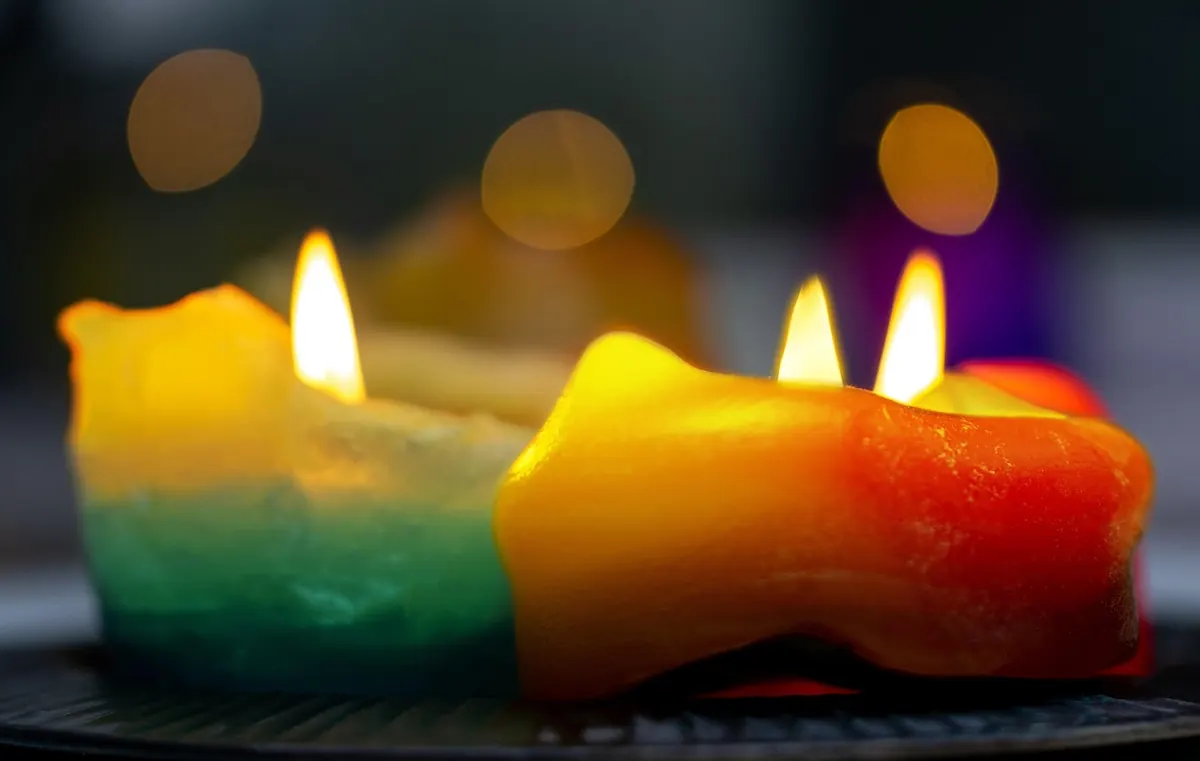
- A taper candle in a simple holder, or a squat pillar candle on a small dish
- Two or three dried stems, a single branch, or one fresh bloom in a slim vase
- A small trailing plant in a pot that fits the tray
- A stone, a paperweight, a small ceramic figure, a pretty match jar
Two rules of thumb. First, create contrast: if the base is matte and dark, let the accent catch light or have some sheen. Second, let the accent rise above the base by a noticeable amount — roughly one and a half to two times its height — so the arrangement has a clear high point instead of a flat plateau.
Putting It Together
- Clear the table completely. Start from empty, not from rearranged.
- Set the base slightly off-centre — about a third of the way in from one end, not dead middle.
- Place the vessel beside or partly overlapping the base, close enough that they touch or nearly touch. A hand's width apart is usually too far; a cluster reads better than three separate islands.
- Put the accent behind and slightly to the side of the vessel, so the tallest point sits at the back corner of the group.
- Step back three paces and look at the silhouette. You want a rough triangle: wide and low at the front, tall at the back.
- Leave the remaining two-thirds of the table bare. Fight the urge to fill it.
Avoid mirroring the arrangement symmetrically unless your room is very formal. Slight imbalance is what makes it look collected rather than arranged by a rule book — which, admittedly, it was.
Fixes for the Five Most Common Problems
- It looks cluttered. Remove the object you like least and leave it off for a week. You will rarely miss it.
- It looks flat. Add height, not more objects. A taller candle or a few stems will do more than a fourth item.
- It looks busy. Unify the colours. Three objects in one family — wood, black, and cream — will always look calmer than three bright ones.
- It looks cold. Add something organic or tactile: woven fibre, dried grasses, stone, unglazed clay.
- It looks heavy. Swap one piece for glass or thin metal, and lower the overall height of the group.
Try It This Weekend
You do not need to buy anything for your first attempt. Walk around your home and gather three candidates: one flat, one hollow, one tall. Set them on the coffee table using the steps above. Then take a photo from the exact spot where you normally sit on the sofa — that angle is the honest test, not the view from standing in the doorway.
Live with it for a week before changing anything. When you do want a refresh, swap one object at a time — a different bowl, a seasonal stem, a candle in a new colour. Rotating a single piece every few months keeps the table feeling current without turning into a collection. Three things, chosen on purpose, beats twenty things that simply landed there.
Photo: SHAI YYC / Pexels